
A way into the work.
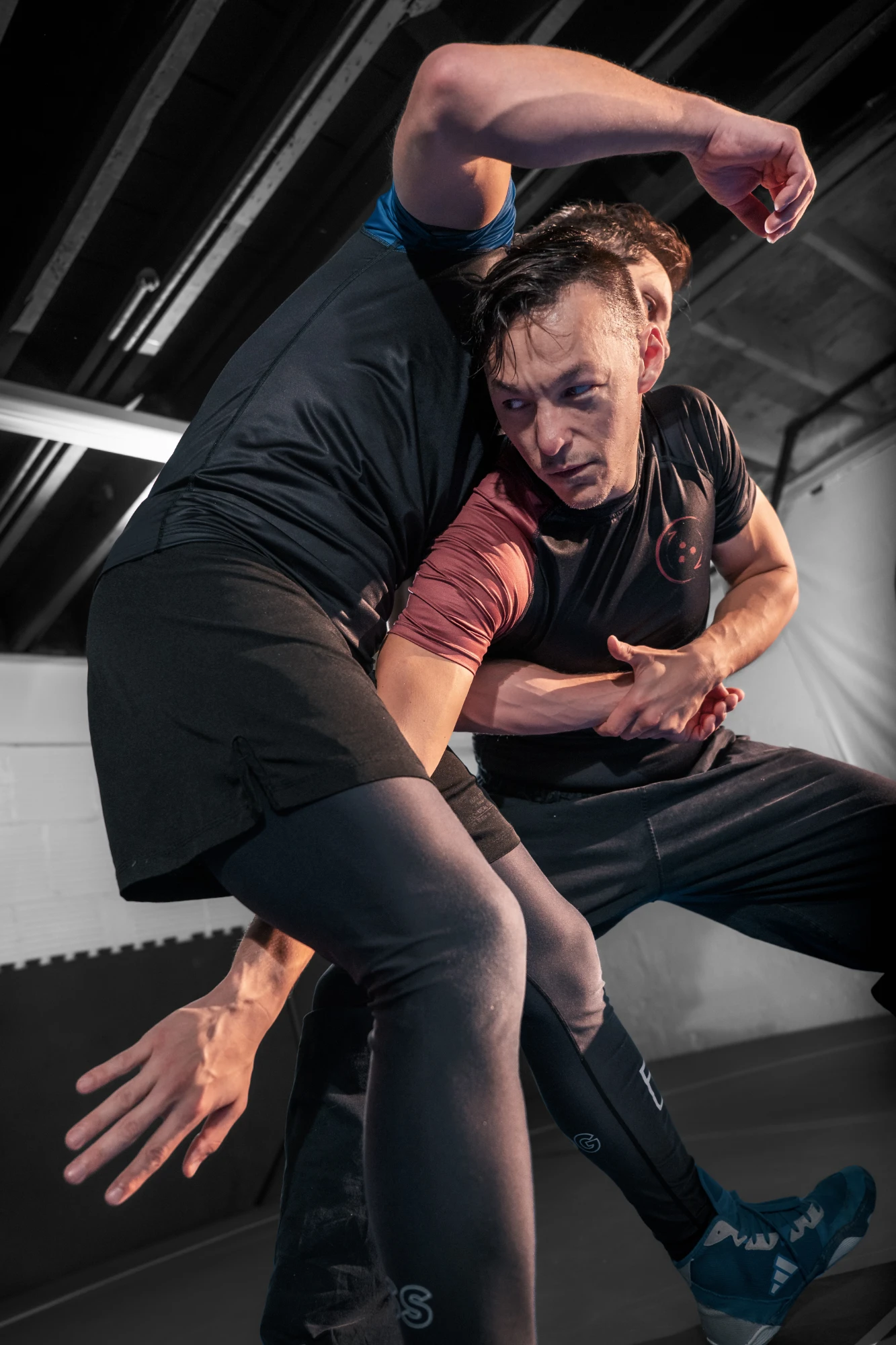
Panantukan explores Filipino empty-hand striking through angles, rhythm, close contact, and off-balancing. At MKG Milwaukee, it connects striking to the ways we position and move around a partner. The exchange includes what happens before and after a punch, not only the punch itself.
Philippines / Filipino diaspora
Panantukan is a term widely used in international Filipino martial arts teaching for a body of empty-hand boxing material. Terminology is not uniform across the Philippines or its diaspora. Here, the name refers to the material studied within the MKG training context.
Historical context / further reading: MKG University curriculum.
What are we really practicing?
Footwork creates the opportunity
An angle is more than a location beside a partner. It changes which actions are available to each person. We use clear partner tasks to explore how a small step, a change in rhythm, or an adjustment in contact can create a better position.
Striking and balance interact
A strike can occupy attention while contact influences posture. Conversely, an off-balance can create an opening for a strike. Separating those elements at first makes them easier to study; reconnecting them reveals why timing is more valuable than a long sequence of movements.
Keep the training agreement clear
Some material examines vulnerable targets and disruptive actions. Practice needs controlled substitutions and explicit limits so the idea can be studied responsibly. Cooperative drills reveal mechanics; carefully chosen resistance reveals whether the positioning and timing survive a partner’s response.
A question to take to the mat:
What does your angle change for your partner, as well as for you?
Lyceum’s approach, adapted from The Big List and our notes on learning and partnership.