
A way into the work.
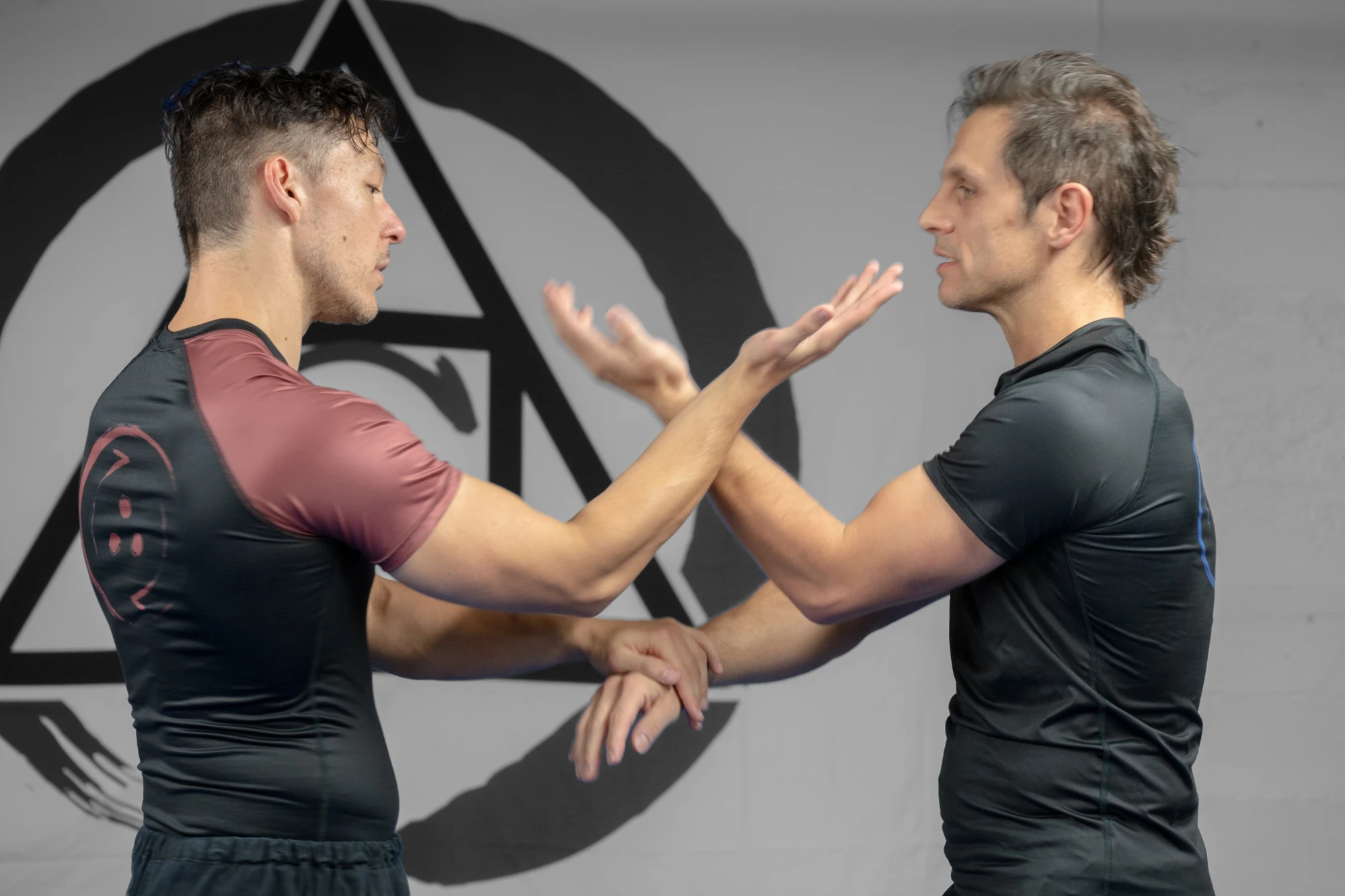
Wing Chun studies directness, structure, and decisions at close range. Forms and partner drills give us ways to examine how the body organizes force and responds through contact. At Lyceum, the work follows the influence of Sifu Francis Fong’s lineage.
Southern China
Wing Chun is a southern Chinese martial tradition. Its early history includes oral traditions and differing accounts, so a simple origin story should not be mistaken for a settled historical record. Our own curriculum identifies the Francis Fong lineage as the specific influence on this practice.
Historical context / further reading: Francis Fong Martial Arts Academy.
What are we really practicing?
Structure is responsive
Structure is not a shape to hold regardless of what happens. It is a relationship between alignment, direction, and the force arriving through contact. A useful position lets you act without unnecessary tension and change when the situation requires it.
Touch supplies information
Chi Sao and other contact drills help us notice pressure, gaps, and changes in intention. The value lies in perceiving and responding, not in winning a familiar drill. Variations in timing and pressure reveal when a response is sensitive and when it is simply rehearsed.
A drill is one part of the picture
Close-contact work creates a deliberately narrow learning environment. We also need to understand how contact begins, changes, and ends. Connecting the drill to movement and distance keeps its lessons in context, rather than assuming every exchange will begin in its preferred position.
A question to take to the mat:
Are you maintaining useful contact, or holding on to a position that has already changed?
Lyceum’s approach, adapted from The Big List and our notes on learning and partnership.